



The specialist in gas tension springs with damping
A gas tension spring with damping combines the spring force of gas with a controlled movement pattern. Because the piston rod in this type of spring is retracted at rest, an external load creates an extension force — while the addition of damping ensures that this movement proceeds smoothly. Particularly in applications where movements must not be abrupt but need to be both precise and safe, this type plays an important role.
Get in touch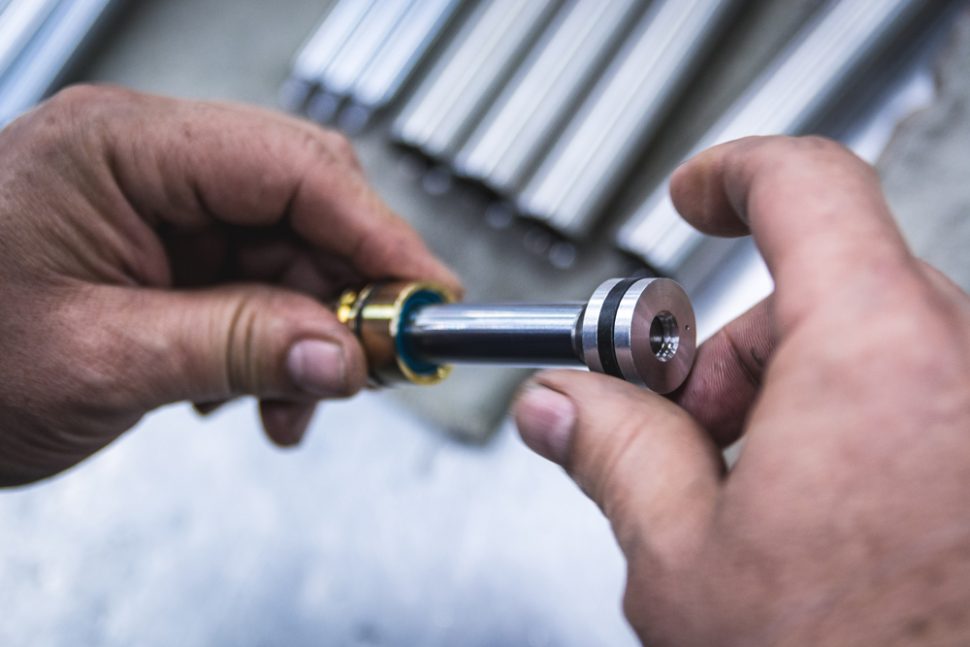
REPLACE YOUR GAS SPRING
Replace and order your current T-Technics gas spring easily & quickly with the article number. Order your gas springCALCULATE YOUR GAS SPRING
Order your desired gas spring in just a few steps using our configurator. Assemble a panel/hatch gas springCATALOGUE
The gas springs are custom-made for each customer and offer virtually unlimited possibilities. View catalogue
How a gas tension spring with damping works
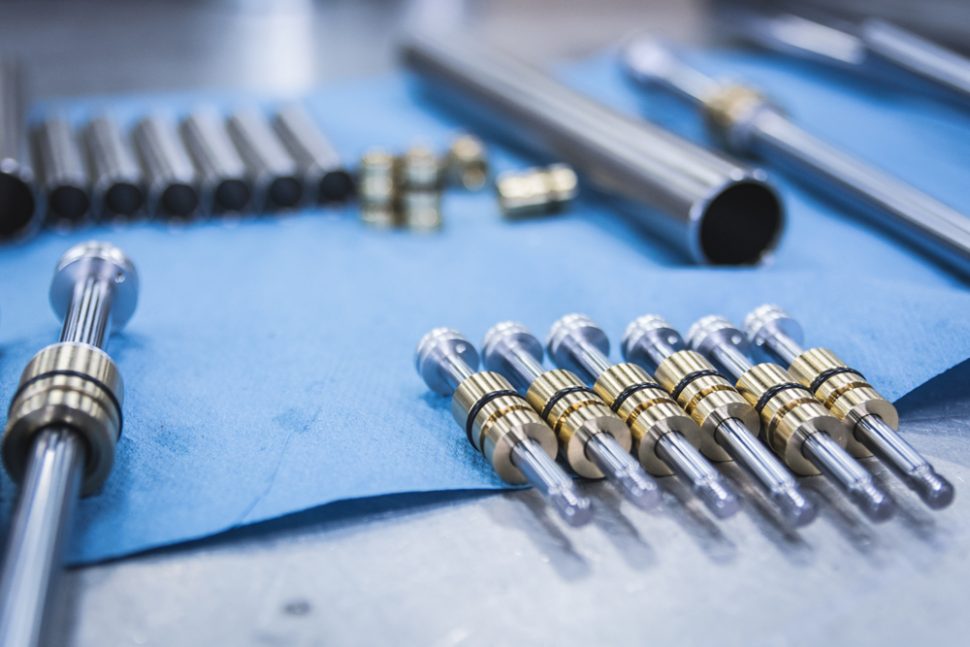
The core of a gas tension spring with damping is a cylinder filled with nitrogen (gas) and oil, containing a piston with a valve. In the retracted position, the pressure in both cylinder halves is equal. As soon as a force is applied to pull out the piston rod, the gaseous nitrogen compresses, which generates the extension force. The oil in the system flows through channels and valves that provide resistance — this is the damping. The narrower these channels or smaller the valve openings, the slower the movement will be.
Damping characteristics can vary: some gas tension springs only dampen at the end of the stroke, while others have damping throughout the entire stroke. For example, gas springs with dynamic damping — in this case, a tapered groove is incorporated into the piston rod, filled with gas or oil, causing the resistance to increase as the piston extends further.
Advantages of gas tension springs with damping
A gas tension spring with damping prevents shocks during opening or closing, reduces noise disturbance and increases safety by preventing parts from suddenly starting to move. In industrial machinery, furniture, or medical applications, the damping ensures that movements are smoother and wear on components remains limited. Damping also helps to maintain control at high speeds or under greater loads.
Additionally, temperature is a factor: the operation of gas springs changes with temperature (as described by the gas laws). At temperatures lower or higher than the standard measurement value, the force of the spring may deviate slightly. Damping can then help to keep movements smooth despite the changed pressure.

Applications of gas tension springs with damping
Gas tension springs with damping are used where space is limited but control over movement is desired. Think of doors or hatches that need to be opened from a confined space, or flaps that must not shoot open under pressure. In production engineering, shipbuilding and yacht building, this is a common occurrence. Even in sun shading systems or technical enclosures, this type is used to balance weight and to ensure operation remains quiet and safe.
In environments with varying conditions (temperature, humidity) a gas tension spring with damping is also valuable, as the damping smooths out movements when the gas pressure deviates from the ideal.

Quality and selection criteria
When choosing the right gas tension spring with damping, several points are crucial:
- Material of the cylinder and piston rod, especially when corrosion or hygiene are a consideration. Variants in steel or stainless steel are available.
- The stroke length and working length must be matched to the application, so that the movement can be fully utilised without overloading.
- The damping characteristics (how much resistance, when and where in the stroke) and whether damping is desired over the full stroke or only towards the extension/retraction end.
- The temperature range in which the spring operates without significant deviations in force or performance.
Buy a gas tension spring with damping from T‑Technics
Anyone looking for a gas tension spring with damping for a specific application will find an extensive range at T‑Technics — both standard and custom-made. Options range from various noise levels to widely applicable temperature ranges. Pay attention to the correct specifications, such as force, stroke length and damping type, to ensure stable and long-lasting performance. Feel free to get in touch for advice or request a quotation.